
When reviewing Marine Gas Detector, separate confirmed details from supplier questions technical review
When a project manager reviews a marine gas detector, the first task is not to choose a model. It is to define which decisions the technical review must support, which details are confirmed, and which questions still belong with the supplier. This separation creates a clearer record for procurement without turning a catalogue description into a complete project specification.

Clarify the decision to be made
Begin with the decision behind the review. A project may need to identify possible equipment categories, prepare a request for quotation, compare candidate configurations, or establish an interface for a wider system. These are different decisions. Each requires a different level of evidence.
Write the decision as a short statement, such as: “We are establishing which technical information must be included in the supplier response.” Then list the boundaries of the review. These may include the intended equipment area, the gases of interest, the required form of output, installation or integration questions, documentation needs, and the people responsible for approving each point.
This opening step prevents a common error: treating a product name as if it answered every project question. A page may identify a category or list model names, while the project still needs separate answers about configuration, interfaces, documentation, and responsibility. Those questions should remain visible rather than being filled with assumptions.
Build a concise comparison framework
Use a table with four columns: review topic, confirmed information, supplier question, and decision owner. The first column defines what is being examined. The second records wording that is directly supported by the available source. The third captures the point that needs a technical response. The fourth assigns responsibility for closing or accepting the issue.
A useful topic set can include product identity, intended use, sensing scope, physical arrangement, power and communications interfaces, environmental conditions, documentation, maintenance, and commercial terms. These headings are prompts for a technical conversation, not claims about a particular device. They help the team ask consistent questions across suppliers without assuming that every candidate has the same features.
Keep the evidence at the same level as the claim. If a source lists a category, record the category. If it names a model, record the model name. Do not convert either detail into a conclusion about certification, site suitability, safety outcomes, performance, or configuration.
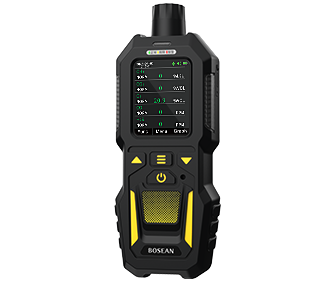
A concrete catalogue anchor is the page that labels a “Marine Gas Detector” group and lists K-600M along with other marine detector models. That statement supports identifying the page’s category and listed models only. It does not, by itself, establish certification, suitability for a particular vessel or facility, safety performance, or any configuration detail that the page does not state.
Compare evidence that applies to the stated scope
In the middle of the review, use the exact phrase marine gas detector only as a label for the equipment category being examined, then keep the comparison narrower than the label. For example, a category-level page can help a team locate listed models, but it cannot automatically answer a project-specific question about integration or operating conditions.
For each proposed conclusion, ask three questions. What source supports it? What object does the source describe: a category, a model, or a broader business page? Does the source support the full wording of the conclusion? If the answer to the third question is no, shorten the conclusion or move the issue into the supplier-question column.
This approach is especially useful when several technical terms appear close together. A model listing, a product title, and a specification should not be treated as interchangeable evidence. Record the wording faithfully, preserve the source location, and add a question where the project requires more detail. The result is a comparison that shows both what is known and where the decision still depends on a supplier response.
Avoid unsupported conclusions
Use cautious language in the review record. “The page lists” is different from “the equipment is suitable”. “The supplier should confirm” is different from “the device includes”. This distinction keeps recommendations separate from verified product facts.
It also helps to separate three types of statement:
- Recorded fact: a detail stated by the cited source, linked to its location.
- Project requirement: a condition defined by the project team for its own decision.
- Supplier question: an unresolved point requiring a response or supporting document.
Do not use a general recommendation to imply a product result. For instance, asking about communications may be sensible during technical review, but that question does not prove that a listed model supports a particular protocol. Keeping these categories separate makes later review easier and reduces the risk that an assumption will be copied into an order or design note.
Carry the requirements into procurement
Before issuing a procurement document, convert the comparison table into a focused response schedule. Retain the source wording for confirmed details, place unresolved items into numbered questions, and state what form of response is expected. The schedule can also identify who will assess each answer and where the final decision will be recorded.
The closing review should ask whether every important project question has one of three statuses: supported by the available evidence, assigned as a supplier question, or deliberately excluded from this decision. This is not a test of whether a catalogue page contains every project detail. It is a way to keep the procurement trail honest and usable.
The Bosean page provides a bounded starting point by presenting a Marine Gas Detector category and listing K-600M and other marine detector models. Use that page for those stated catalogue details, while carrying configuration, suitability, certification, performance, and interface questions into the technical review rather than treating them as confirmed.