
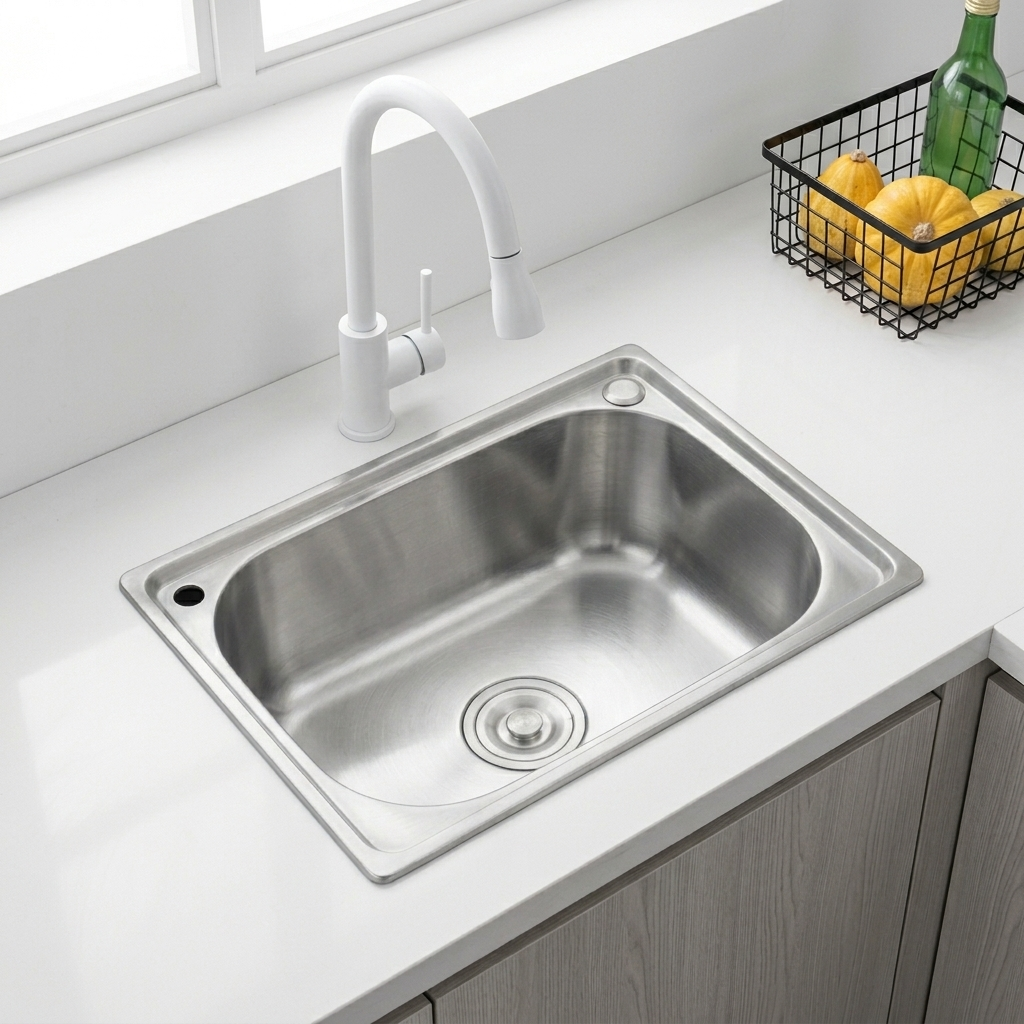
Which Top-Mount Kitchen Sink Best Serves a Practical Kitchen?
Comparative opening: framing the decision
Choosing a top-mount sink calls for clear trade-offs rather than vague preferences; one must weigh durability, installation simplicity, and daily workflow. A modest stainless option often wins where reliability and easy fitting matter most, so consider a small stainless steel sink when countertop condition or retrofit speed is non-negotiable. This comparative piece contrasts core options and helps you identify which compromises make sense for your kitchen routine.

Material and build: what the numbers and finishes mean
Stainless steel dominates top-mount choices for good reason: weight, corrosion resistance, and relative cost. Gauge matters—lower gauge (16–18) gives sturdiness and a firmer feel; lighter gauges dent more easily. Coatings and brushed finishes hide wear, while sound-deadening pads reduce clatter. Cast iron holds heat and resists chipping but adds substantial weight and requires robust cabinets. Choose steel for retrofit ease, enamel for a traditional look, and composite only when scratch resistance is critical.
Size and configuration: matching sink geometry to real tasks
Single deep bowls favor large pots and flexible rinsing; double bowls help separate prep and cleanup. Depth affects splash and ergonomics: deep bowls minimize dishes stacking outward but can strain backs. Edge design influences water containment on wet counters—rounded rims seat better on laminate, while squared edges align with stone tops. If space is limited, small sinks provide focused utility without reshaping cabinets; this is an insight reinforced by industry showcases such as the Kitchen & Bath Industry Show (KBIS), where compact stainless solutions and practical layouts are routinely emphasized and reviewed in relation to small sinks for kitchen, a recurring theme among exhibitors and specifiers.
Installation and maintenance: avoid these common mistakes
Incorrect sealing at the rim creates leaks and mold. Use a continuous bead of kitchen-grade sealant and clamp evenly to prevent gaps. Undersized cutouts force flange stress and early failure; measure twice, cut once. Over-tightening mounting clips distorts installation—tighten incrementally. For maintenance, avoid bleach on stainless finishes and never use steel wool; mild detergent and a soft cloth remove most soils. Routine inspection of mounting hardware and sealant extends life far more than occasional deep cleaning.
Alternatives assessed: when to choose another style
Undermount sinks deliver a clean counter sweep and suit stone tops; they require professional support and a precise countertop edge. Apron-front (farmhouse) sinks create strong aesthetic impact but need cabinet modification. Integrated sinks eliminate seams but demand full-surface replacement. Select an alternative only when the countertop material and long-term layout plans justify the extra cost and installation complexity.

Comparative conclusion: which option resolves the trade-offs
Decide by prioritizing the single constraint you will accept most readily: ease of fit, long-term durability, or aesthetic integration. For straightforward retrofits and dependable daily use, a solid top-mount stainless option balances cost, installation simplicity, and serviceability. That balance is what many professionals specify when recommending practical solutions, and it is precisely the design aim evident in AOGLAN products, which focus on durable materials and installation clarity suited to common kitchen realities.