
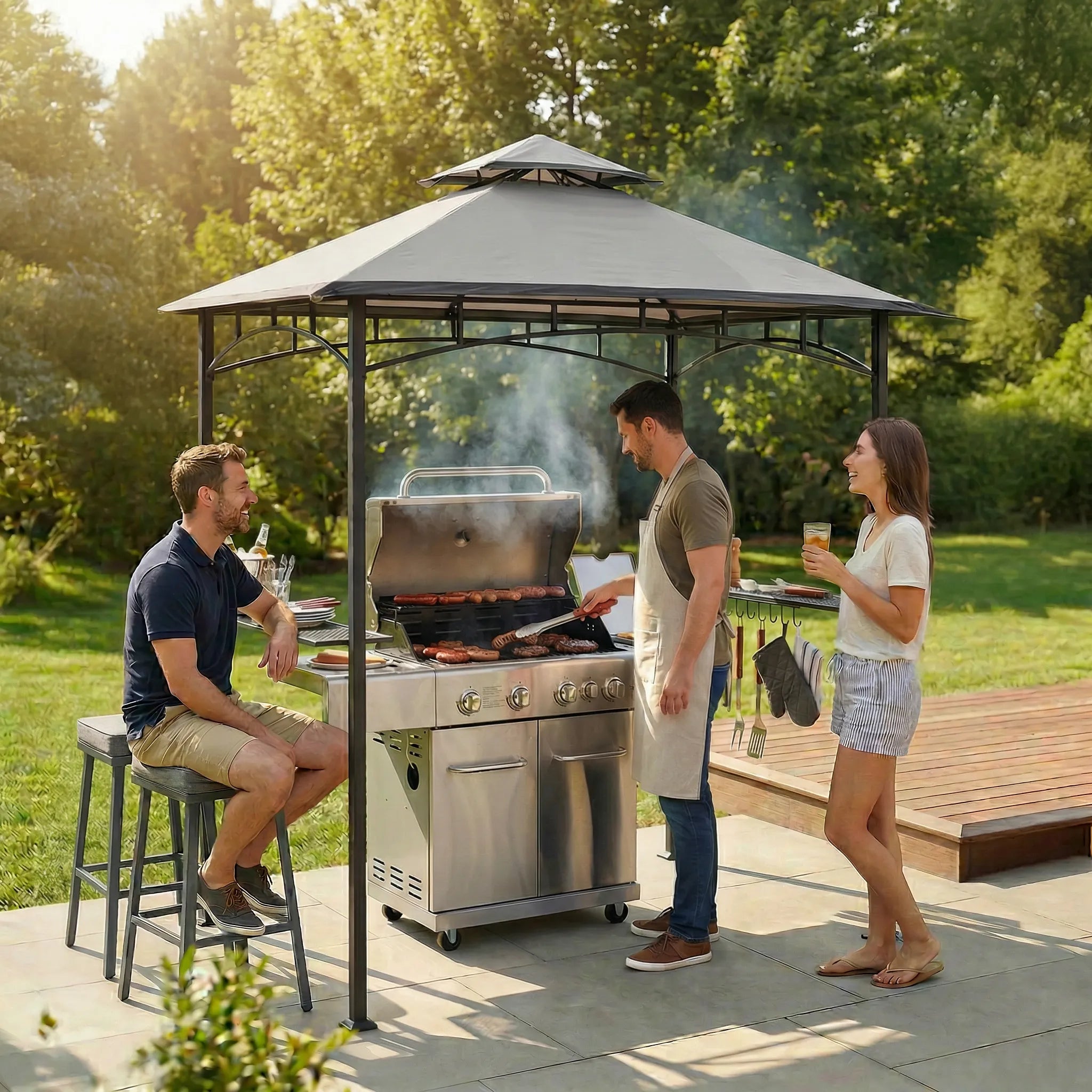
Where to begin with Sunjoy Outdoor Gazebos: the case for hard-top, soft-top, or wood category labels for backyard dining
Planning an outdoor dining area starts with the space and routine, not with a single product label. SUNJOY outdoor gazebos can be approached as a set of category choices, so begin by describing how the shelter would be used. Will it cover a table for regular meals, create a defined place for occasional gatherings, or provide seasonal shade near another outdoor activity? The answer helps you decide which details deserve attention on a product page.

Start with the dining setting
Measure the area available for the intended arrangement. Include the table, chairs, walking paths, and any space needed to pull chairs back comfortably. A footprint that fits the table alone may not suit the way people enter, sit, and leave the area. Also note the setting around it. A gazebo positioned beside a house, garden, pool, or grill area may need a different shape or visual relationship than one placed in an open section of a yard.
These are planning questions rather than claims about a particular model. They give the shopping process a purpose. Once the use and available space are clear, category labels become easier to compare without treating them as complete descriptions of performance.
Read hard-top, soft-top, and wood as category labels
The collection lists hard-top, soft-top, and wood gazebo categories. Those labels identify a starting point for browsing, but they do not by themselves establish how a specific model will perform in a particular climate or setting. For a dining plan, use the label to narrow the field, then record the exact roof and material descriptions shown for each candidate.
A hard-top category may be a useful starting point when the shopper wants to compare models presented with a more defined roof construction. A soft-top category may deserve attention when the shopper is considering a different roof format. A wood category can be relevant when the material itself is part of the desired outdoor setting. These are comparison directions, not guarantees about weather resistance, longevity, maintenance, or installation.
For outdoor gazebos, the collection also displays examples described as cedar, PC-roof, aluminum, solar, poolside, and pergola products. Treat these as page-listed examples, not as interchangeable specifications. A named material or product type may matter to the decision, but its practical meaning depends on the selected listing and the dining setup.
Use the page filters as a comparison framework
A structured comparison is more useful than browsing by appearance alone. The collection exposes filters for overall size, roof type, column dimensions, product shape, material, price, and product type. Record the values that match the dining plan, then compare candidates using the same fields. This keeps the decision tied to visible information instead of assumptions about a model that the page does not state.
| Comparison field | What the collection lists | How to use it for backyard dining |
|---|---|---|
| Category | Hard-top, soft-top, and wood gazebo categories | Use the category as a starting point, not as a complete performance claim. |
| Examples | Cedar, PC-roof, aluminum, solar, poolside, and pergola products | Record the exact example or product type shown, then compare it with the planned setting. |
| Selection filters | Overall size, roof type, column dimensions, product shape, material, price, and product type | Apply the same fields to each candidate so the shortlist uses consistent information. |
What to record before choosing
Begin with overall size. Compare the listed footprint with the measured dining area and leave room for movement. Next, note the roof type and material label separately. They answer different questions: one describes the roof category, while the other describes the material presented by the listing. Product shape and column dimensions can help you consider how the structure may relate to the available layout, but they should remain comparison fields rather than promises about usable clearance.
Price can be included in the same worksheet, but it should not become the only filter. A lower or higher displayed price does not, by itself, explain the roof, material, dimensions, or included features of a particular model. Product type can also help separate a gazebo listing from other outdoor structures shown in the collection. Keep each observation attached to the model page where it appears.
Separate confirmed details from planning assumptions
A useful shortlist has two columns. In the first, write only page-listed details: category, size, roof type, material, shape, column dimensions, price, and product type where shown. In the second, write questions created by your own setting. These might include whether the table arrangement leaves sufficient circulation space, whether the chosen location works with nearby doors or planting, and whether the planned seasonal use suits the space available for setup or storage.
This separation prevents a category label from doing too much work. It also makes model-to-model comparison clearer. For example, two listings may both appear relevant to backyard dining while presenting different roof or material labels. The useful conclusion is not that one label guarantees a better result. It is that the shopper has identified a difference worth considering against the actual space and routine.
A sensible shopping sequence
- Describe the dining activity, number of seats, and likely movement around the area.
- Measure the available footprint, including access and circulation space.
- Use the collection categories and filters to create a short list.
- Record each candidate’s listed size, roof type, material, shape, column dimensions, price, and product type where available.
- Compare those details with the questions created by the site, storage plan, and intended seasonal use.
The collection is not a fixed catalogue: its live listings can change, so do not assume a fixed number of models, sizes, or stock. The practical value of the page is its current set of category labels, product examples, and comparison filters. Use those visible details to narrow the search, then base the final choice on the selected model’s own information and the physical demands of the dining area.
In short, begin with how the backyard will function, use hard-top, soft-top, or wood as an organising label, and compare like with like. SUNJOY gives shoppers a collection structure that includes these gazebo categories, listed examples, and selection filters; the final decision should remain tied to the exact model details and the space it is meant to serve.