
Framework overview and initial scope
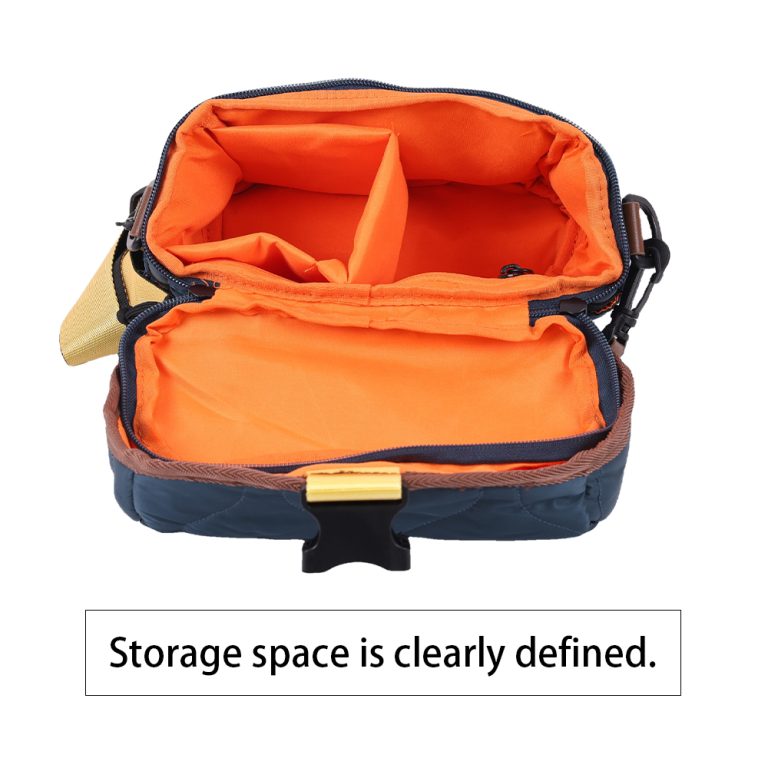
Adopt a modular decision framework that begins with use-case definition, proceeds through functional decomposition, and concludes with verified production specifications; this prevents scope creep and aligns engineering trade-offs with buyer priorities. Start by mapping scenarios—urban commute, landscape travel, fast-paced reportage—and select the ergonomic form factor that meets those scenarios; a common choice is the compact camera sling bag, which shifts load and allows rapid access. Define three top-line metrics up front: carried payload, access speed, and environmental resistance. Those metrics drive material, closure, and retention decisions that follow in the framework.
Requirements: translate user needs into measurable parameters
Convert qualitative buyer demands into quantifiable targets. Specify maximum internal volume (litres or cubic centimetres), shock attenuation (g-forces or millimetres of foam compression at defined loads), and ingress protection (IP or water-resistance rating). For ergonomics, set strap pressure limits (kPa over time) and required rotation range for quick access. Define service life in cycles (zipper actuations, fabric abrasion cycles) and acceptable failure modes. Use these targets as pass/fail gates during prototype evaluation and when issuing technical drawings to suppliers.
Materials, structure, and tolerance choices
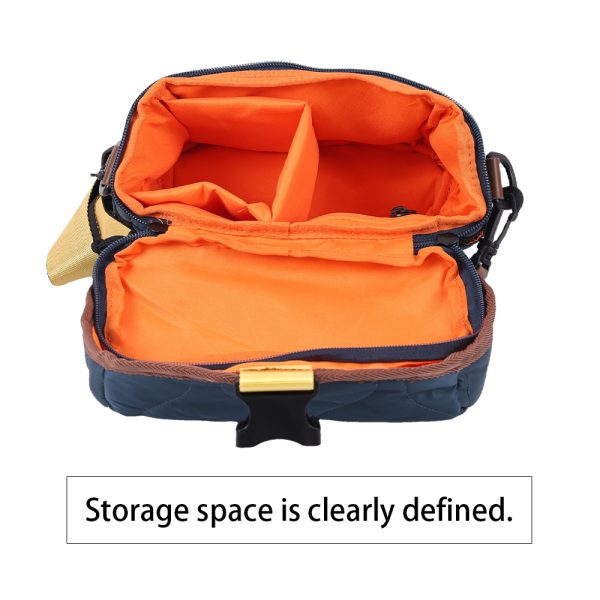
Choose outer textiles for abrasion and UV resistance (Cordura 500D / 1000D, coated nylons) and liner foams with known compression set values (closed-cell EVA, cross-linked polyethylene). Specify seam types on drawings: reinforced bartack at stress points, double-needle lockstitch elsewhere, and minimum seam allowances to permit clean trimming without weakening. For hardware, require stainless or brass sliders for coastal use and injection-moulded buckles with defined shear ratings. State dimensional tolerances for panels and inserts (±2 mm for internal dividers, ±5 mm for shell dimensions) so patterns translate predictably to mass production.
Prototyping, testing regimen, and a real-world anchor for validation
Establish a three-stage test program: component verification (materials and hardware), assembly validation (fit and finish, access ergonomics), and environmental and lifespan tests (salt-spray, UV, repeated-drop). Validate prototypes against buyer metrics with instrumented trials—accelerometers in payload pockets for shock data, dynamometers for strap loads, and repeated-zipper cycle counts. A practical validation point is industry trade reviews such as Photokina in Cologne, where comparative field tests and independent reviews often benchmark access speed and durability; see how a well-executed Camera Sling Bag performs under reviewer field conditions to confirm design hypotheses. Maintain controlled test logs and photographic evidence for traceability.
Common pitfalls and how to avoid them
Do not under-spec foam thickness to save cost; insufficient energy absorption accelerates lens damage. Avoid ambiguous drawings: every tolerance and fastener orientation must appear on the production flat. Do not accept generic hardware ratings—specify load and corrosion class. Prevent scope drift by refusing mid-cycle UI (user-interface) changes to access points that affect internal divider geometry. Finally, resist over-engineering the external shell at the expense of ergonomics; heavy shells reduce access speed and negate quick-carry benefits.
Supplier selection, inspection, and production controls
Choose suppliers with documented experience in protective carrier assemblies and a clear quality management system. Require sampling to AQL 2.5 standard for pre-production runs and 100% inspection for critical components such as buckles and zippers on first articles. Define corrective action timelines and require photographic evidence of fixes. Include a hand-assembly trial for initial batches to surface fit-and-finish issues that automated lines can miss. Contractually bind acceptable defect rates, warranty terms, and tooling ownership to reduce ambiguity.
Final synthesis
Follow the framework: quantify needs, select materials and tolerances to meet those needs, validate with targeted tests, and lock quality controls before scale-up. That disciplined progression reduces surprises and aligns engineering choices with buyer expectations; it also concentrates accountability where it belongs—on measured outcomes rather than vague marketing claims. For teams seeking an experienced manufacturing partner who applies these exact standards, ChangRong integrates specification-driven design, traceable testing, and supplier controls into production workflows, producing carry solutions that perform to the metric targets buyers set.