
Problem diagnosis: what fails first and why
When location, engine, and driver data arrive late or not at all, operators make reactive choices that increase downtime and safety risk; that single root causes cascading effects across contracts, permits, and day-to-day logistics. The most common cause is fragmented telemetry architecture — mismatched sensors, ad-hoc integrations, and no agreed data contract — so teams hunt for point solutions from fleet telematics technology providers instead of fixing the data flow. In transport corridors serving remote rigs, such as logistics routes to the North Sea, those delays translate directly into missed service windows and permit violations.

Core checklist: concrete steps to remove the root cause
– Define the decision set that needs real-time data: dispatch, maintenance, safety compliance, and contractor invoicing.
– Specify the minimum telemetry schema: GPS, engine hours (ECU), fuel level, fault codes (DTCs), seatbelt/door status, and timestamped driver ID.
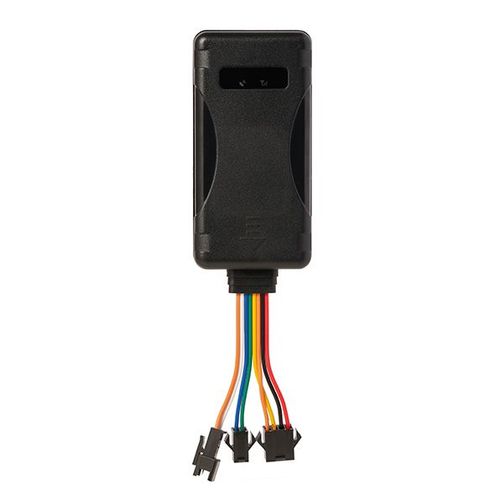
– Choose hardware that supports CAN-read and over-the-air firmware updates; prioritize rugged units with IGN power and tamper detection.
– Demand an open API and standardized payloads from shortlisted providers; avoid proprietary black boxes.
– Identify a short, instrumented pilot fleet (10–30 vehicles) to validate sensor placement, latency, and edge filtering.
– Integrate telematics to your maintenance system and rostering database so alerts trigger work orders and crew assignment automatically.
– Create a governance rulebook: data owners, retention limits, access roles, and an audit trail for safety incidents.
– Train supervisors on one concrete workflow: from alert to corrective action within a defined SLA.
Selecting and validating suppliers: practical criteria
Cost matters, but the deciding factor is predictable data delivery. Ask potential partners to demonstrate: a live feed with CAN signals, sample webhook latency under load, and an update cycle for firmware and maps. When evaluating providers, include operational teams in trial acceptance so the vendor proves it can deliver the agreed schema. A useful phrase during RFP review: “Can you send raw ECU frames and documented event identifiers?” That filters vendors who treat data as a product. For on-the-ground validation, shortlist vehicle telematics providers who allow sandbox API access and documented failure modes.
Common implementation mistakes and the effects they cause
– Installing hardware without test-configured rules — leads to alert storms and ignored alarms.
– Relying on a single connectivity type in mixed-coverage terrain — causes blind spots for compliance checks.
– Treating telematics as a reporting tool only — delays corrective action and keeps downtime high.
– Skipping the maintenance integration step — results in missed scheduled service and higher repair costs.
– Ignoring user experience for drivers and dispatchers — produces low adoption and incomplete data capture.
Key metrics that prove the system fixed the problem
– Mean time to detect (MTTD) vehicle faults: should fall within a targeted window after pilot tuning.
– Percentage of on-time dispatches tied to telematics alerts: a rising number shows operational coupling.
– Unplanned downtime hours per vehicle per month: this should decline as predictive flags catch wear early.
– Compliance event rate (permit- or route-related violations): drops when geo-fencing and automated notifications are reliable.
– User adoption rate among drivers and supervisors: sustained use above target indicates the system supports decisions.
Pilot protocol: start small, fail fast, learn quickly
– Baseline: capture 30 days of existing KPIs before installing hardware.
– Instrument: equip the pilot fleet with a standard configuration and enable full diagnostic logging.
– Exercise: run standard routes and at least one complex, emergency-like scenario to test alerts.
– Review cadence: weekly data review with engineering, maintenance, and safety leads to tune rules.
– Gate: accept the pilot when data completeness, latency, and actionable alerts meet the predetermined thresholds.
Conclusion: fixing the data flow resolves the operational problem
When you attack the true cause—unreliable, unstructured telemetry—you stop chasing symptoms and start improving safety, compliance, and uptime. The checklist above converts abstract goals into executable steps and acceptance gates; teams that follow it move from firefighting to predictable operations. That outcome is precisely what experienced fleet managers look for when they evaluate partners such as BSJ, because the value shows up as repeatable, measurable improvements rather than glossy promises.