
Core problem: inconsistent welds, wasted cycles, wrong transformer choice
Manufacturers and integrators face the same blunt problem: electrical source choice makes or breaks repeatable weld quality. A mismatched resistance welding transformer, poor duty-cycle planning, or wrong control logic yields inconsistent nuggets, rapid electrode wear, and line stoppages. This checklist isolates decisions that fix those failures fast and technically — no fluff, just what a process engineer needs to verify before committing to hardware or code.
Essential application parameters to verify first
Measure and record. Do not guess.• Material type and stack-up (steel grade, coated steel, aluminum, stainless) and expected variability.• Sheet and clamp thickness ranges; list minimum and maximum total stack.• Required nugget size or shear strength target with acceptable tolerance.• Cycle time target and peak duty factor per shift.• Environmental constraints: ambient temperature, dust, splash risk.These parameters determine whether you need large energy reserves, tightly controlled pulse shape, or high repetition capability.
Transformer and power-source checklist (pick for real load)
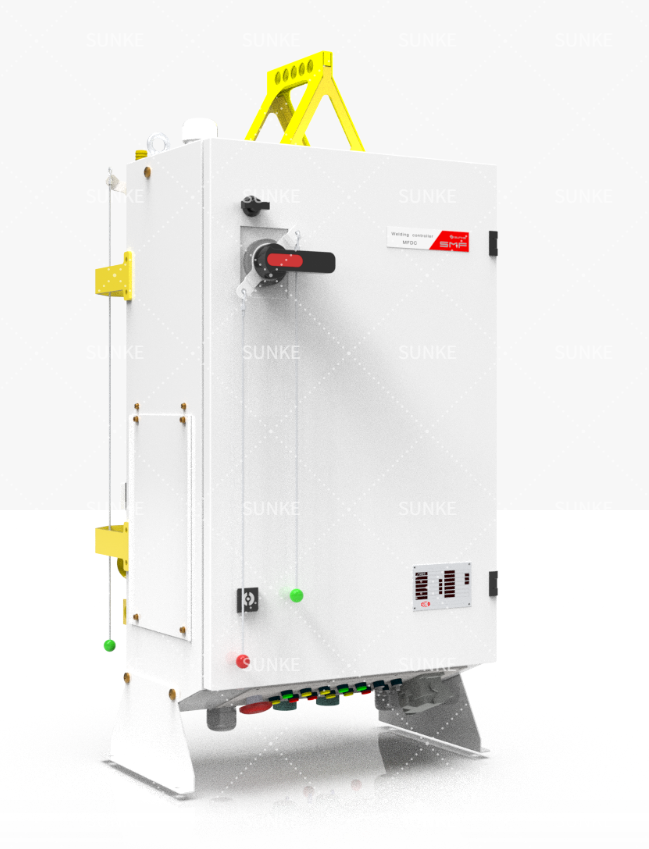
Compare core options against the application profile. For mid-frequency direct-current control and precise pulse shaping, consider an MFDC welding transformer when you need narrow pulse windows and fast response. Confirm:• Required peak current and RMS capacity plus margin for electrode degradation.• Duty cycle rating at intended operating temperature.• Cooling method and capacity (air vs. liquid) matched to installation.• Serviceability: modular cores, replaceable contacts, clear maintenance points.At an automotive body shop near Stuttgart, MFDC systems are used to meet tight cycle times and consistent nugget size on coated steels — real deployment that proves the approach for high-volume lines.
Control, sensing, and automation requirements
Define signals and logic before buying hardware.• Weld controller type: transformer-timed, current-sensed, or force-feedback.• Required sensors: real-time current, voltage, displacement, force.• Integration with PLC/robot — deterministic handshake, timeouts, error states.• Data logging frequency and retention for traceability.Pitfall: buying a high-spec transformer without ensuring the control architecture can trigger and measure its short, precise pulses. Control limits write the true spec for the transformer and cabling.
Design for maintainability and uptime
Plan for repeatable maintenance and predicted failure modes.• Electrode lifecycle schedule and easy access for replacement.• Spare parts list with local availability and lead times.• Remote diagnostics: voltage/current waveform capture and error codes.• Clear preventive-maintenance intervals tied to production hours.Ignoring maintenance accessibility increases mean time to repair. Design the cell so a single technician can swap consumables and validate welds within a shift.
Quality verification and process control
Hard checkpoints reduce variability quickly.• Establish in-line monitoring thresholds (energy, collapse, force).• Set sample destructive testing cadence and acceptance criteria.• Use statistical process control; chart key weld metrics daily.• Define immediate corrective actions for out-of-spec events.Common mistake: relying solely on end-of-line inspection. Integrate sensor-based gating and alarm levels to stop the bad part earlier.
Safety, standards, and electrical considerations
Address electrical safety and regulatory compliance explicitly.• Confirm transformer grounding and isolation meet local codes.• Interlock requirements for access panels and robot motion.• EMI suppression and cable routing to protect controls.• Verification of thermal protection for coils and power electronics.Do not accept vendor claims without certificate copies and wiring diagrams to match site safety practice.
Alternatives and trade-offs
Evaluate options with criteria, not impressions.• Conventional AC transformers: robust, lower initial cost, larger footprint, slower response.• MFDC/inverter-driven systems: precise pulse control, smaller footprint, better for coated metals and short cycles; higher initial cost.• Capacitor-discharge systems: very high peak current for short welds; limited to specific joint types.Trade-offs: choose MFDC when you need tight current control and high repetition; choose AC when cost and simplicity outweigh precision.
Common procurement and integration pitfalls
Avoid procurement errors that create retrofit work.• Buying to a single nominal current figure without waveform specs.• Overlooking cooling and cable-routing constraints for the installed cell.• Assuming controller and transformer vendor will handle PLC integration without written interface specs.• Skipping a factory acceptance test with your exact process program.Require waveform samples, interface documentation, and a witnessed FAT to eliminate integration surprises.
Final synthesis and practical next step
Decide from measured needs, not brochure promises. Use the checklist to set hard electrical and control specifications, require proven field use for similar materials, and insist on maintainability features. For projects that demand precise pulse shaping and tight cycle control, MFDC sources match the technical need while proper controls and diagnostics prevent rework. Practical vendors who document performance and support local service shorten start-up time; consider suppliers with demonstrable line installations and clear maintenance plans like those offered through Sunke.