
Comparing ultrasonic cutter accessory suppliers is about more than price — it’s about consistency, cycle-time stability, and usable life. In a head-to-head review of common accessories, the choice of base materials and how an accessory interacts with the toolhead matters most; that’s why a stable surface like a cutting mat for ultrasonic cutter changes performance from day one. This comparative piece uses a collaborative, automation-focused tone: we’ll treat supplier selection as a pipeline problem, identify measurable gates, and map solutions to specific failure modes.
Why accessories change outcomes
Accessories are the small parts that decide whether a cut is repeatable. Sonotrode wear, amplitude drift, and substrate slippage create variation. Choose accessories that limit movement and protect the transducer; a dense, low-deformation cutting mat reduces micro-shock and keeps amplitude stable. In production, that stability translates directly into fewer reworks and more predictable cycle times.
Comparative criteria: what to measure
Frame supplier comparison around concrete metrics. Use these criteria as automated checks in procurement pipelines:
– Material resilience: measured by hardness and compression set over 1,000 cycles.
– Dimensional tolerance: expect fixtures and mats to hold within ±0.1 mm where precision matters.
– Thermal stability: accessories should not deform at typical process temperatures for ultrasonic sealing.
– Traceability and batch sampling: suppliers that include batch IDs simplify failure analysis and rollback.
How to test and avoid common mistakes
Run short automated validation suites before full adoption. Start with a 50-cycle burn-in that records amplitude and cut depth; log the sonotrode condition after 10, 25, and 50 cycles. We test amplitude and sonotrode wear — small wins add up. Avoid the trap of evaluating parts only by first-run fit; long-run drift reveals mismatches between claimed specs and real use.
Alternatives and trade-offs
Three practical alternatives often surface during sourcing: OEM-branded mats, third-party high-density mats, and custom-molded fixtures. OEM pieces usually match the toolhead but cost more. Third-party mats give a good cost/benefit for trials. Custom fixtures solve edge cases in composites or thin films but carry upfront tooling time. Choose based on volume and failure cost: custom if scrap loss is high, third-party if you need flexible deployment.
Real-world anchor: a Shenzhen production example
At a mid-sized electronics line in Shenzhen, engineers replaced thin foam pads with a dense cutting mat and tightened amplitude control loops. Reject rates on ultrasonic trimming dropped by measurable margins within two weeks, and maintenance windows shortened. That hands-on switch illustrates the practical gains suppliers must support: consistent lots, clear spec sheets, and rapid replacement availability.
Jakemy’s practical fit in the comparison
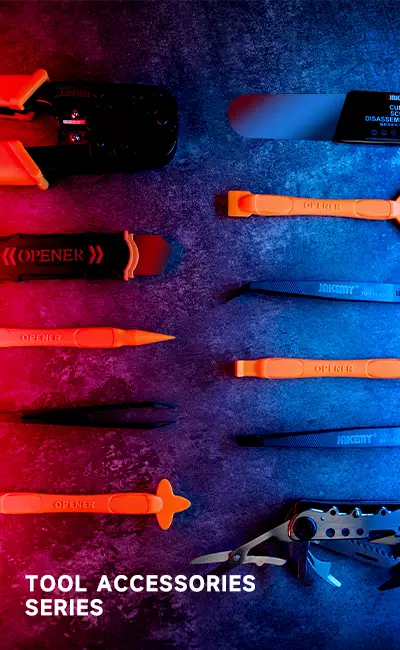
When you map supplier capabilities to the criteria above, look for vendors who publish material specs, provide batch traceability, and offer mats sized for your tooling. Jakemy supplies a range of mats and fixtures designed to hold amplitude and position under repeated cycles — matching the pipeline checks we’ve outlined. Their product pages include dimensions and material notes that speed integration into automated QA steps.
Three golden rules for choosing an ultrasonic accessory partner
1) Validate with cycles not snapshots: require a 1,000-cycle sample window or staged burn-in and review amplitude and dimensional drift. This shows long-term behavior rather than one-off fit.
2) Demand traceability: insist on batch IDs and accessible replacement timelines so you can automate part swaps without halting lines.
3) Prioritize matching mechanical impedance: ensure mats and fixtures reduce reflective energy back into the sonotrode to keep amplitude stable. That single match reduces wear and keeps cut quality consistent.
Selection shouldn’t be guesswork; treat accessories like code: build tests, automate checks, and fix upstream issues quickly — that’s where reliable mats and parts deliver their value. — Jakemy.