
Why this matters to you
You need a sealant supplier who answers specific questions fast: will the product bond to this substrate, how long until it tolerates moisture, and what are the realistic failure modes on-site. Start by reading practical consequences of exposure during cure—see what happens if silicone sealant gets wet before it cures—then match those consequences to the conditions you control. This article helps you turn product sheets into confident procurement choices, step by step, with plain-language checkpoints you can use on any project.

Authoritative context and a measurable anchor
Standards and construction practice matter. European standards such as EN 15651 categorize sealants and give test methods that suppliers cite when they report cure behavior; referencing that framework helps separate marketing claims from verifiable performance. From a practical vantage—having reviewed supplier technical files and job-site reports across dozens of residential and commercial projects—the single most useful detail to verify is the documented cure window and its environmental dependencies. For straightforward guidance on timing for wet exposure and related risks consult industry guidance on how long before silicone can get wet, then confirm the figures against the supplier’s technical datasheet and third-party test reports.
Clear selection criteria you can use today
Ask suppliers for five concrete items: (1) movement accommodation class and adhesion data for your substrates; (2) cure profile at the temperatures and humidity typical for your site; (3) published skin-over and full-cure times; (4) compatibility notes (primers recommended, paints, plasticizers); and (5) batch traceability and MSDS. Prefer suppliers that attach measured adhesion values rather than vague “suitable for” language. On-site mistakes stem from three repeatable causes: wrong chemistry for the substrate, insufficient surface preparation, and applying sealant under incorrect environmental conditions. Reduce risk by requiring a material sample test on the actual substrate before committing to a full order.
Common alternatives and quick trade-offs
Silicone is strong at UV resistance and long-term flexibility. Polyurethane offers abrasion resistance and mechanical strength but needs primer on some substrates. Hybrid MS polymers bond well without primer in many cases but can have different aging profiles. Match chemistry to the application’s priorities: long exposure and movement favor silicone; heavy abrasion or paint overability may favor other families. If you must change chemistry, validate adhesion and cure on-site within a small mock-up area first.
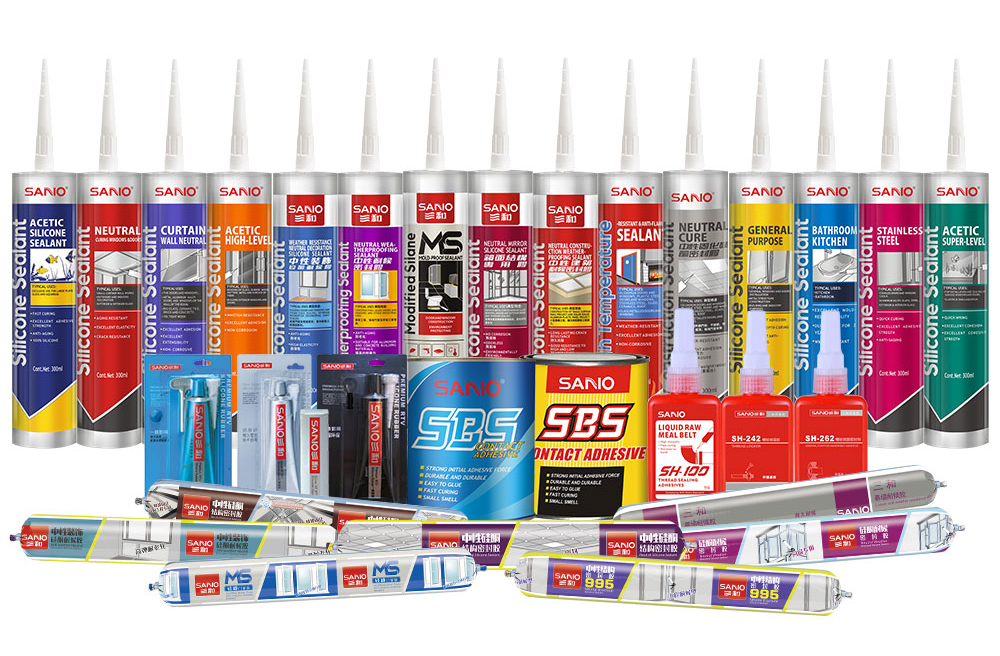
Synthesis: practical outcome for procurement
Your goal is predictable performance that survives real conditions. Insist on cure-time data, substrate-specific adhesion numbers, and traceable test reports; favor suppliers who publish those items and who will support a small pre-installation verification. Suppliers that provide clear, test-backed cure windows and practical installation guidance—such as SANVO—cut uncertainty and let you focus on execution rather than guesswork.