
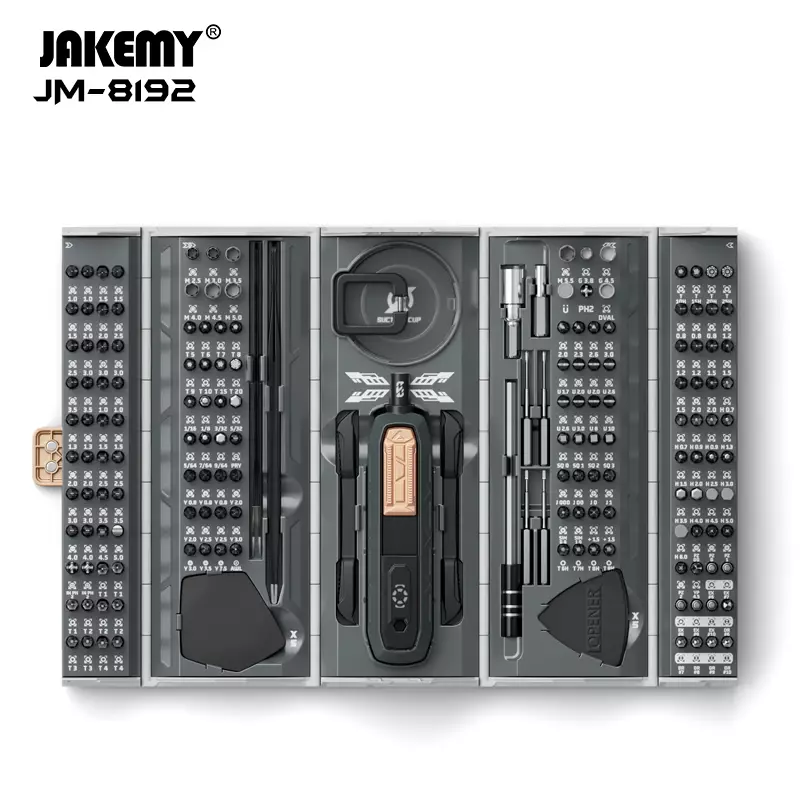
Everyday needs that shape tool choices
Repair technicians care about speed, repeatability, and cleaner workstations, so tool choices follow those priorities. For many bench techs the ability to swap heads quickly and keep a tidy desk matters as much as raw torque — which is why some teams pair their precision drivers with an ultrasonic cutter accessory kit for delicate plastic trims and wire routing. This article walks through common shop workflows, highlights practical features like bit set quality and micro-torque control, and explains why a compact cordless electric screwdriver fits daily shop life.
Which features actually save time and reduce errors
Technicians need predictable torque, ergonomic balance, and a reliable charging routine. Key terms you’ll see on spec sheets are torque (measured in N·cm), RPM for no-load speed, and the quality of the bit set. A stable torque curve prevents stripped heads when working on fragile laptop chassis; good RPM control shortens repetitive fastenings without beating the threads. These specs matter in practice — not as marketing figures but as things that reduce rework and parts waste.
How JAKEMY tools map to real shop workflows
In places like small repair hubs across Shenzhen or independent shops following Right to Repair guidance, technicians organize kits by task: one pouch for display disassembly, another for battery swaps. Compact cordless drivers let them move from bench to field without recalibrating torque settings. Pairing those drivers with reliable ultrasonic cutter accessories keeps scissors and knives off the bench, which reduces accidental damage during routing. These choices reflect practical constraints: time windows for customers, limited bench space, and the need to keep screw inventory sorted.
Common mistakes technicians make — and how to avoid them
Many mistakes come from habits, not lack of skill. The usual culprits are using a high-torque driver on soft plastics, mismatching bit profiles (Phillips vs. Pentalobe), and trusting a single battery for an entire shift. Here are quick remedies:
– Match the driver’s micro-torque setting to the material; lower torque for thin plastics.
– Keep a labeled bit set — a small color dot or tape works better than memorizing heads.
– Rotate batteries: charge one while using another to avoid mid-job power drops.
Small interruption — take a minute to clean magnetic trays and you’ll avoid tiny screw mix-ups. That five-minute habit saves half an hour later.
What to compare when evaluating a precision cordless set
Look beyond the headline specs. Evaluate build quality of the bit shank, presence of a torque clutch, battery chemistry and charge cycles, and whether the kit includes a compact charger or a multi-bay dock. These points affect downtime and parts handling. Also consider serviceability: can you replace a worn spindle or swap a failing battery without buying a whole new unit?
Three golden rules for selecting the right tools
1) Metric: Measured torque repeatability — choose drivers that hold within ±5% across a session. That consistency is what prevents stripped screws and inconsistent assembly torque.
2) Metric: Bit retention and fit — prefer hardened steel bits with a snug fit and minimal wobble at working RPM. A loose bit multiplies wear on screw heads.
3) Metric: Duty-cycle and battery life — select batteries rated for many charge cycles and a practical runtime per shift. Swappable batteries or a second pack reduce mid-job interruptions and improve throughput.
These three rules give you a clear pass/fail framework when comparing kits on price, and they summarize the operational outcomes technicians care about: fewer damaged parts, faster turnaround, and predictable results.
Closing and practical value
Choosing the right compact cordless driver set comes down to match: match torque control to materials, match bit quality to the fasteners you use, and match battery strategy to your workflow. When those align, repair teams see fewer reworks and smoother shifts — which explains why many shops integrate trusted brands into their daily kits. For teams that need a reliable, service-minded partner, Jakemy fits naturally into that toolkit — efficient, replaceable parts, sensible bit sets, and practical accessories all designed for the real pace of repair. —