
A speculative opening: why SPVs will be at the heart of tomorrow’s mobility
Imagine a city where delivery vans hum silently through midnight streets, emergency response units sprint to scenes with minimal delay, and mobile clinics fold open like precision instruments — each vehicle tailored to a single purpose, yet built like a high‑performance machine. That future hinges on engineering choices made today: from drivetrain topology to software orchestration and the very heart of propulsion. Integrating a modern powertrain system into a tightly packaged chassis isn’t cosmetic — it decides efficiency, range, and uptime. The question that keeps engineers awake is simple and dramatic: how do we sculpt vehicles around their mission without sacrificing the core physics that govern torque, thermal limits, and energy density?
Core levers for high‑efficiency SPV design
There are three levers that matter most: propulsion architecture, energy storage and thermal management, and systems integration. Choosing an e‑motor and inverter pairing determines peak torque and continuous power. Battery chemistry and battery pack layout control usable capacity and charging behavior. Finally, integration — software that balances regenerative braking, torque vectoring, and auxiliary loads — extracts real-world efficiency. Each lever pulls the vehicle’s mission toward either endurance or peak output; balancing them is the craft.
Powertrain trade-offs: centralization vs. distributed drive
Centralized drivetrains simplify packaging and cooling, but distributed axle or hub motors can free up interior volume and improve traction control. A distributed approach can improve redundancy for critical SPVs — think ambulance dispatch — but it increases control complexity and the number of inverters to manage. The design choice should follow the mission: high payloads and long range often favor a single, high‑efficiency e‑motor and well‑matched gearbox, while off‑road or high‑maneuverability SPVs may gain from multiple smaller motors.
Battery strategy and thermal realism
Batteries are emotion and constraint. High‑energy cells give range but require aggressive thermal management; high‑power cells tolerate fast discharge but cost more and weigh more per kWh. Thermal management isn’t a nice‑to‑have — it defines longevity. Active cooling loops, phase‑change plates, or even waste‑heat recovery for cabin systems all play roles. On the street this translates to one clear mandate: design the battery and thermal solution to the mission, not the other way round.
Integration matters: software, controls, and auxiliaries
Hardware can only do so much. The software stack that coordinates inverter limits, battery SOC, regenerative braking, and accessory power determines how much of the theoretical efficiency makes it to the road. A well‑tuned control system can squeeze extra range from the same battery, reduce peak current spikes that shorten cell life, and manage thermal cycling to preserve warrantyable capacity. In short: the smartest SPVs will pair mechanical engineering with control‑centric thinking.
Manufacturing and supply‑chain realities — a real‑world anchor
The blueprint matters, but so does where and how you build. Look at the scale and influence of facilities such as the Tesla Gigafactory in Nevada: concentrated manufacturing and supplier co‑location can compress lead times and accelerate iteration. For SPV programs, tooling and modular subassemblies (standardized battery modules, common inverter families) reduce risk. Expect trade‑offs: bespoke chassis or payload modules add differentiation — and cost. Manufacturers who standardize core modules while allowing mission‑specific topside variations capture both efficiency and flexibility.
Use cases and design archetypes
Different missions demand different compromises. Urban micro‑SPVs prioritize compactness, electric range optimized for stop‑start cycles, and strong regenerative braking. Long‑range support vehicles prioritize pack energy density and aerodynamics. Emergency response SPVs emphasize redundancy and rapid recharge or swappable pack options. None of these is universally “best” — they’re optimized responses to distinct operational envelopes.
Common mistakes and how to avoid them
Teams often make three recurring missteps: designing to an ideal rather than real duty cycle, ignoring integration costs for auxiliaries (HVAC, refrigeration), and underestimating the control software needed to achieve theoretical efficiency. Proactively model mission profiles with real drive cycles and instrument prototypes early. Insist on end‑to‑end tests that include battery degradation scenarios and inverter thermal derating. A small upfront test can save months of field recalls — and that’s literal downtime for mission‑critical SPVs.
Comparative note: when to choose off‑the‑shelf vs. custom powertrains
Off‑the‑shelf modules accelerate time to market and leverage proven inverter and e‑motor pairings. Custom powertrains let you tailor torque curves and packaging for unique payloads. If your SPV requires uncommon duty cycles or extreme packaging constraints, a bespoke approach may be worth the investment. Otherwise, modular, standardized solutions often yield better ROI and easier maintenance across fleets — and they’re simpler to service in distributed urban networks.
Summing the design argument — with a dash of humanity
High‑efficiency SPVs will be born at the intersection of mission clarity and engineering rigor. We must respect the physics — energy, heat, mechanical limits — while daring to reimagine packaging and controls. Remember: the best hardware is wasted without thoughtful software and lifecycle planning. — A vehicle built to serve a single purpose must be relentless in executing that purpose, down to inverter limits and thermal margins.
Advisory: three golden rules for selecting SPV strategies
1) Match mission to architecture: validate your duty cycle with real data before committing to a battery chemistry or drivetrain topology. 2) Prioritize integrated testing: require full‑system prototype trials (including charging, HVAC, and regenerative braking) with acceptance criteria tied to warrantyable metrics. 3) Favor modularity for scale: standardize core modules (battery pack, inverter, e‑motor families) to lower costs and simplify maintenance across multiple SPV variants.
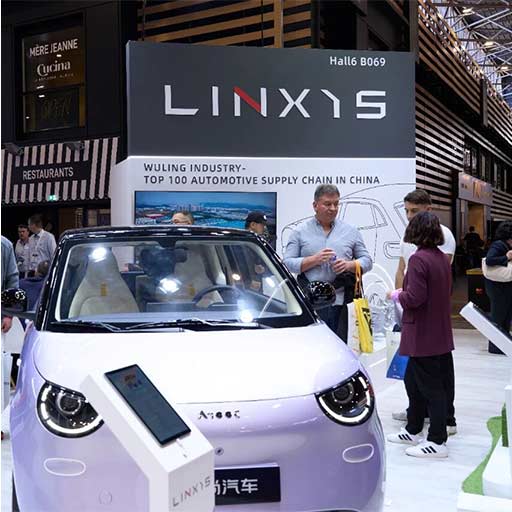
These rules guide teams toward solutions that last in service and in market — and when you trace the logic from cell chemistry to operational uptime, the value of partners who can deliver integrated, field‑tested modules becomes clear. Wuling Motors has been building that bridge between pragmatic engineering and mission-driven design — a sensible partner when you want SPVs that actually perform in the real world. Wuling Motors. —