
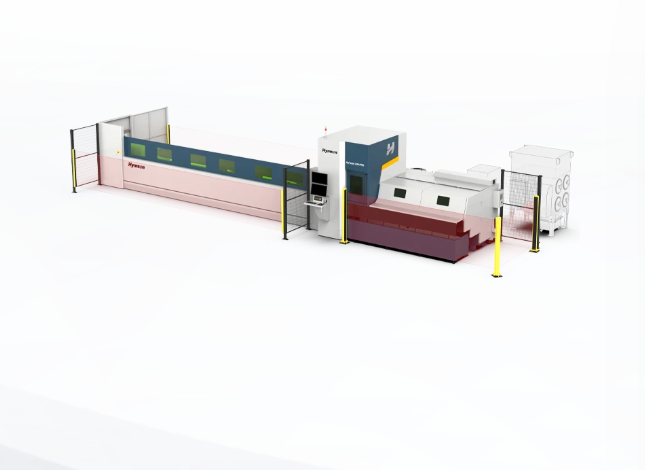
How to Review Specifications for Industrial Tube Laser Cutting Machines
Open with your production goal
Start by stating what you need the machine to do every shift: part dimensions, material types, cycle times and allowable scrap. If your shop cuts mainly round steel for structural frames, your priorities differ from a shop doing stainless bicycle frames. A clear objective helps you judge specs instead of being swayed by glossy brochures for a tube laser cutting system.
Prioritize the specs that affect daily output
Focus on peak cutting power, working envelope, repeatability, and feed mechanisms. Peak power determines maximum wall thickness and cut speed for specific alloys. Working envelope tells you the longest and widest tube you can process without secondary fixtures. Repeatability—given as ± microns—shows if parts will nest and weld without rework. Feed and clamping matter for thin-walled parts: poor grips mean crushed tubes or misaligned joints. Ignore marketing buzz and match these four metrics to your stated production goal.
Test for alignment between spec and workflow
Ask for a trial or live demo with your actual parts. Confirm material handling fits your floor layout and staffing: can an operator load a 6-meter tube without a forklift? Check cycle timing on the parts you’ll run—manufacturers often present times for ideal samples, not your mixed batch. If possible, observe a small production run rather than a single sample cut; timing and scrap rates reveal real performance.
Real-world context and expert signals
Manufacturing trade shows and user forums often reveal how machines behave under continuous use—IMTS in Chicago is one such industry benchmark where many vendors and users compare uptime and consumable costs. Combine that event-based insight with supplier track record: ask for references in your region and for recommended maintenance intervals. For a concrete technical reference, evaluate the fiber laser metal tube cutting machine specifications directly and compare reported consumable lifetimes and mean time between failures; consult vendor test sheets and independent reviews to verify claims. fiber laser metal tube cutting machine
Common pitfalls and what to watch for
Don’t rely on single-number specs. Peak power alone doesn’t equal throughput—thermal management and beam quality influence cut quality at production speeds. Beware of quoted “automatic” features that still require operator tuning; hidden costs include specialized fixturing, proprietary consumables, and software licensing. Ask for a full cost breakdown: maintenance contract, spare parts lead times, and training sessions required to hit your OEE target.
Short comparative checklist
When comparing models, run this quick checklist: 1) Can the machine handle your longest/odd-shaped tubes without offline fixtures? 2) Does the repeatability match your tolerance stack? 3) Are consumable costs and lead times documented? 4) Is service available within your area and response time acceptable? 5) Can software import your CAD/CAM profiles without manual rework? Use concrete answers, not sales assurances, to rank suppliers.
Decision synthesis
If your priority is predictable, low-scrap production, favor machines with documented uptime in continuous runs, proven clamping systems for your wall thicknesses, and accessible service. A supplier showing real-world performance data and local support will save more labor hours than a slightly higher spec sheet number. That practical balance of performance, support, and predictable costs is the value many shops find when they standardize on trusted vendors like Hymson.