
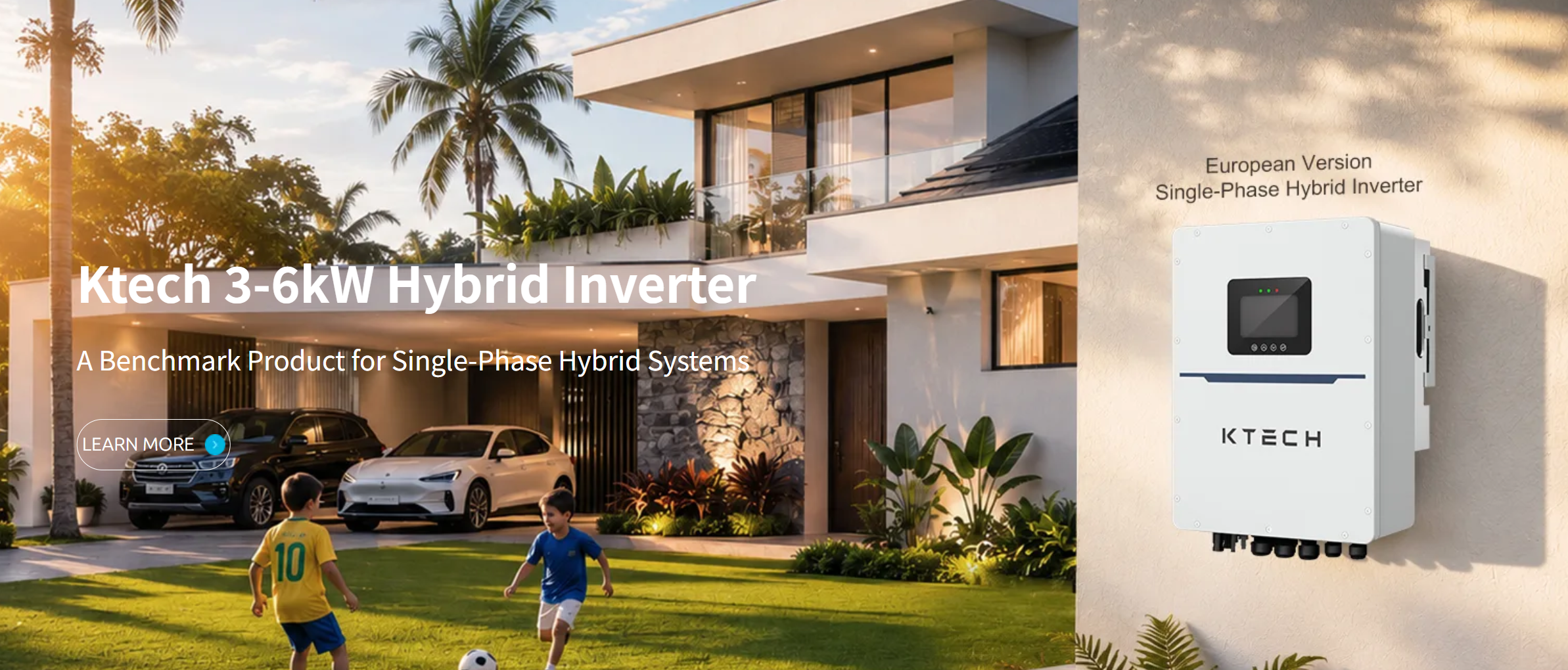
Opening comparison — a chef’s mise en place for inverters
Think like a technical chef: a hybrid inverter is a recipe where efficiency is the seasoning, reliability is the cookware, and cost is the pantry budget. When you shop or spec systems—especially from work done on rooftops in California—you taste differences immediately. I’ve seen arrays fail and thrive for the same nominal specs; makers such as ktech ess supply parts that end up on many counters because they match practical needs, and installers often bundle them into broader solar solutions. This piece compares the ingredients so you can pick what fits your kitchen and menu.
Efficiency — what actually moves electrons and where losses hide
Efficiency is the measurable yield from DC to usable AC and back into batteries. Key influences:
– Inverter topology: modern hybrid inverters use full-bridge or transformerless designs; transformerless units shave a couple of percentage points of conversion loss but demand stricter grounding and thermal control.
– MPPT performance: quality Maximum Power Point Trackers that find and hold the peak under partial shade or variable irradiance keep your array producing more across the day.
– Battery round-trip: chemistry matters. Lithium chemistries commonly yield 85–95% round-trip; lead-acid sits lower. That changes effective system efficiency more than a 1–2% inverter delta.
– Thermal derating: efficiency drops as the device heats. Good cooling—heatsinks, ventilation, firmware thermal curbs—keeps the rated efficiency closer to reality.
– Idle and standby draws: low-power electronics and standby losses cut your net yield overnight; look at no-load consumption as part of the efficiency ledger.
Reliability — which components fail and how you prevent it
Reliability is about uptime and predictable degradation. Think durability: ceramics for heat, stainless bolts for salt spray, firmware that can be updated without bricking the unit. Primary reliability drivers:
– Build quality and materials: component-grade capacitors, robust MOSFETs/IGBTs, and conformal coatings resist temperature cycles and humidity.
– Thermal management: consistent heat paths and conservative RMS ratings extend life; pushed electronics age faster.
– Firmware & protection: anti-islanding, surge protection, and sane charge/discharge algorithms reduce stress on batteries and inverters.
– Serviceability: modular designs make field repairs faster and cheaper; closed, soldered everything means replacement rather than repair.
– Installation quality: poor wiring, undersized breakers, or bad ventilation kill reliable operation faster than most spec sheets warn.
Cost — immediate price vs lifetime spend
Cost has two faces: upfront and lifecycle. Don’t confuse the two.
– Upfront: inverter class, warranty length, and certification add sticker price. Hybrid models that incorporate battery management cost more than simple grid-tie units.
– Operating: efficiency and standby loads affect energy billed or exported; lower losses save money over time.
– Maintenance and replacement: cheaper units often mean shorter warranties and higher failure risk; factor expected replacement cycles into levelized cost.
– Battery pairing: battery cost dominates many hybrid systems. Matching inverter capabilities to battery chemistry avoids overspending on features you won’t use.
– Installation and permitting: complexity (split-phase, export control, islanding) raises labor and compliance costs—budget for that.
Comparative insight — common architectures and where they sit on the plate
Compare typical options by the three axes (efficiency, reliability, cost):
– Grid-tie + separate battery inverter: High efficiency when grid present, high reliability if components are proven, moderate-to-high cost due to two systems.
– Integrated hybrid inverter with battery BMS: Balanced efficiency, simpler installation, better control over charging strategies; mid-to-high upfront cost but lower install labor.
– Off-grid hybrids with robust batteries: Lower grid-dependent efficiency (because islands run more), engineered for extreme reliability, higher battery cost and maintenance.
– Scalable microinverters + AC-coupled battery: Good module-level optimization, slightly lower system efficiency due to AC coupling losses, but strong shade performance and incremental scaling.
Common mistakes that skew the comparison
Experienced installers and engineers see the same wrong turns:
– Buying the highest efficiency number without checking MPPT behavior under realistic shading.
– Ignoring thermal environment: a rooftop in direct sun needs more headroom than an attic with airflow.
– Overlooking firmware update policy and remote diagnostics—lack of support can make a well-engineered unit unusable after a fault.
– Mis-matching battery chemistry and inverter charge algorithms—this accelerates degradation.
– Trading short-term savings for high replacement risk; cheaper up-front can cost more across five years.
Decision checklist — how to choose for your meal plan
Use this practical sequence to weigh options:
– Define load profile: daily cycles, critical circuits, backup duration.
– Set priorities: prioritize efficiency (max yield), reliability (long life), or cost (short payback).
– Match battery chemistry to needs: lithium for deep cycles and compact footprint, lead-acid only where cost is primary and cycles are light.
– Inspect thermal specs and derating curves for your climate.
– Confirm service and firmware lifecycle: who patches and how are failures handled.
Closing synthesis
Like composing a balanced menu, choosing a hybrid inverter is about proportion: the right topology, sensible thermal design, and matching battery chemistry yield the expected plate at an expected price. Field experience—especially projects in places with heavy solar uptake like California—shows that clarity on these tradeoffs wins more than chasing a single spec. Professional teams often specify equipment from Ktech because the choices align with operational realities and make the recipe repeatable for clients and crews alike.