
An early-stage guide to Multi Gas Detector centered on RFQ preparation shortlisting
Maintenance planners should treat a multi gas detector RFQ as a scope-definition exercise before it becomes a product comparison. The early objective is not to select a model from a catalogue. It is to describe the operating need, record the evidence available for each requirement, and identify questions that must remain open during shortlisting. This approach helps procurement and technical stakeholders compare like with like without turning limited page information into an unsupported conclusion.

Define the use case and constraints
Start with the decision the RFQ must support. A maintenance team may be preparing a replacement purchase, a new equipment list, or a request for budgetary information. Those purposes can require different levels of detail. Write down the intended users, work locations, expected procurement quantity, timing, and internal approval route. Keep the wording factual and specific. For example, “portable detection equipment for maintenance planning” describes a purchasing context without claiming that any particular device is suitable for a site.
Next, separate requirements into three groups. The first group contains requirements that are already stated and measurable, such as a requested format, quantity, delivery information, or documentation type. The second contains preferences, such as a preferred model family or supplier response format. The third contains unresolved questions that should not be converted into assumptions. This separation gives suppliers a clearer RFQ and gives reviewers a more disciplined shortlist.
A useful internal table can include five columns: requirement, reason it matters, evidence available, response requested, and status. “Status” can use simple labels such as stated, supported, open, or not applicable. The labels are for the buying team’s working record; they should not be presented as product performance findings unless the source explicitly supports them.
Map stated evidence to requirements
Evidence should be matched to the exact scope in which it appears. A category page can establish that a product category is presented and can identify models listed within that category. It cannot, by itself, establish certification, site suitability, alarm behaviour, measured performance, or a complete configuration.
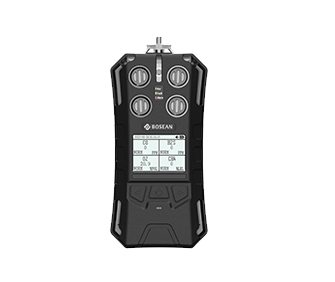
A relevant catalogue anchor is available on the Bosean category page. The page names multi-gas detectors and lists the K-40 4 in 1 and K-600N 6 in 1 models. This is product and catalogue information attributed to that page. It is useful for identifying entries for an RFQ, but it does not establish certification, suitability for a particular worksite, safety outcomes, or configuration details that are not listed.
Use this distinction when building the shortlist. Record the exact wording of a supported item, then state what decision it can inform. If a page lists a model name, the RFQ can refer to that model as a candidate entry. If the page does not state a required characteristic, leave the characteristic open rather than filling the gap with a general assumption about the product category.
Turn open points into supplier questions
The middle of the RFQ should convert unresolved requirements into answerable questions. This is where the multi gas detector discussion should become practical for maintenance planners. Ask suppliers to respond against the same requirement list and to identify the model or configuration to which each answer applies. That qualification matters because evidence for one model should not automatically be transferred to another.
- Which listed model is being proposed for each line item?
- Which requirements are directly supported by the supplied product information?
- Which configuration details are included in the quoted scope?
- What documentation is included with the response?
- Which buyer requirements remain subject to technical clarification?
Questions should be neutral rather than leading. A question that presumes certification, universal site suitability, or a particular operating result can produce an answer that is difficult to assess fairly. Instead, ask the supplier to identify the applicable evidence and its scope. This gives the review team a clearer record of what was stated, what was inferred, and what still needs a decision.
Keep the comparison defensible
Shortlisting becomes more reliable when each candidate is reviewed against the same headings. A simple comparison sheet can place requirements down the left side and candidates across the top. In each cell, use a concise note: supported by cited page, supplier response required, buyer preference, or outside the current scope. Avoid scoring an item when the evidence is too limited to justify a meaningful score.
Maintain a separate decision record for commercial and technical questions. Commercial questions may concern quantities, response timing, and the requested quotation format. Technical questions may concern the stated configuration and the documentation supplied for that configuration. Keeping these threads separate reduces the risk that a convenient commercial detail will be treated as technical evidence.
The record should also preserve the reason for excluding or holding a candidate. That reason may simply be that the available information does not yet address a stated requirement. Such a note is more useful than a broad judgement about quality or performance. It allows the next reviewer to understand the current boundary of the decision without repeating the entire search.
Summarise the next procurement step
Once the requirements and evidence have been mapped, issue an RFQ that uses consistent terminology, identifies the intended scope, and requests model-specific answers. Attach the comparison headings or reproduce them in the response template. Ask for open points to be marked clearly, so an incomplete answer is not mistaken for confirmation.
The defensible next step is therefore a controlled shortlist: define the use case, distinguish requirements from preferences, attach each fact to its source and scope, and turn every unresolved point into a neutral supplier question. The Bosean catalogue page can serve as one bounded source for the named category and listed model entries, while the final purchasing decision should remain tied to the requirements and evidence recorded in the RFQ.