
Problem-driven introduction
Defects escape detection when inspection focuses on appearance while ignoring functional syndrome; that failure mode drives field returns, firmware regressions, and safety incidents for a tv manufacturer that treats testing as optional. The problem is measurable: inconsistent test coverage yields variance in lifetime performance, customer complaints tied to software regressions, and sporadic hardware failures that confound warranty analytics. This piece isolates the root testing gaps and prescribes targeted assays to eliminate them.
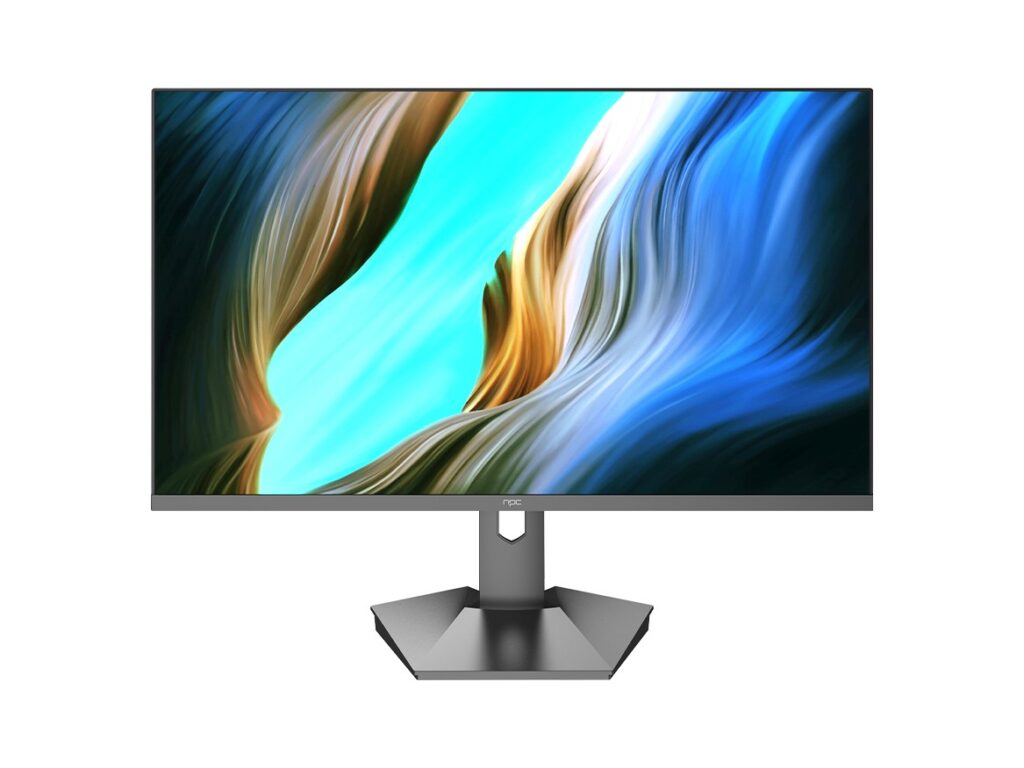
Primary failure domains that must be addressed
Segment testing by failure domain to avoid blind spots: electrical stability, optical fidelity, thermal management, firmware integrity, networking resilience, and regulatory compliance. Each domain requires specific metrics: voltage transients and inrush current measurements for power rails; luminance uniformity, black level, delta-E and gamma curves for optical fidelity; thermal ramp tests and heat-sink thermal resistance for thermal management; boot-time determinism and update rollback validation for firmware; throughput, latency, and packet-loss thresholds for networking; and EMC/EMI scans plus safety dielectric and leakage tests for compliance. Define pass/fail thresholds numerically and enforce them with automated test benches.
Optical and imaging assessments — quantifiable assays
Execute pixel-level screening with 4K+ pattern vectors, automated dead-pixel mapping, and Mura quantification (spatial frequency analysis and power spectral density). Calibrate color using 3×3 matrix optimization and verify coverage of target color spaces (e.g., BT.709, DCI-P3, Rec.2020) with repeatability < 1.5 ΔE. Measure temporal artifacts using motion interpolation stress sequences and log judder events per 10-minute clip. Report luminance decay after 1,000 operational hours and apply corrective thresholds for luminance drift.
Software integrity, usability, and the smart TV OS context
Based on 12 years of product validation in consumer electronics and repeated field audits at major trade evaluations such as CES in Las Vegas, the software layer must be treated as a controlled medical-style regimen: deterministic boot sequencing, secure update channels, and measurable resource budgets for CPU, GPU, memory, and storage. Verify foreground/background task isolation, kernel panic rates per 1,000 device-hours, and OTA update atomicity with rollback verified on failure. Test third-party app sandboxing and permissions enforcement; perform fuzz testing against the network stack. Validate interoperability with common streaming codecs and DRM implementations; log failure rates for adaptive bitrate switching. For platform-level diagnostics and telemetry planning, confirm the behavior of the smart tv os under constrained conditions (low memory, intermittent connectivity) and ensure telemetry does not violate privacy norms.
Reliability and environmental stress protocols
Run accelerated life testing: HALT/HASS cycles, 1,000-hour burn-in under elevated voltage and temperature, humidity soak at 85% RH and 85°C where appropriate, and thermal shock (-20°C to 70°C) with defined dwell times. Include vibration profiles per MIL-STD-810G for shipping simulation. Monitor for parameter drift: frequency of reboot, capacitor ESR growth, and connector contact resistance. Establish a corrective action threshold (e.g., >0.5% field failure rate triggers a design review).
Production-line controls and traceability
Implement inline automated optical inspection (AOI) and X-ray for BGA solder integrity. Use end-of-line functional testers with deterministic scripts covering power, network, UI navigation, and A/V loopback. Embed UID-based traceability and batch-linked failure analytics to enable root-cause isolation within 48 hours. Perform statistical process control on solder joint X-ray metrics, and gate high-variance suppliers via incoming component acceptance sampling (AQL thresholds documented).
Common pitfalls and corrective practices
Do not rely solely on acceptance sampling for firmware releases; test each build against a regression suite that includes stress, concurrency, and security vectors. Avoid short burn-ins that miss infant mortality; use accelerated soak with monitored telemetry to detect early-life failures. Prevent EMI surprises by integrating EMC scans early in prototyping rather than as a final gate. Counter measurement bias by automating subjective tests (e.g., audio perceptual checks) with defined objective correlates.
Practical implementation and metrics for program governance
Define a test matrix mapping component-to-test, pass criteria, and remediation timelines. Track KPIs: field failure rate (FFR) per 10,000 units, mean time between failures (MTBF), firmware regression density per release, and percentage of units passing full functional test at first run. Use these metrics in weekly review cycles and require corrective action plans when drift exceeds control limits. Prioritize fixes by risk score: safety-critical > data-loss > degraded experience.
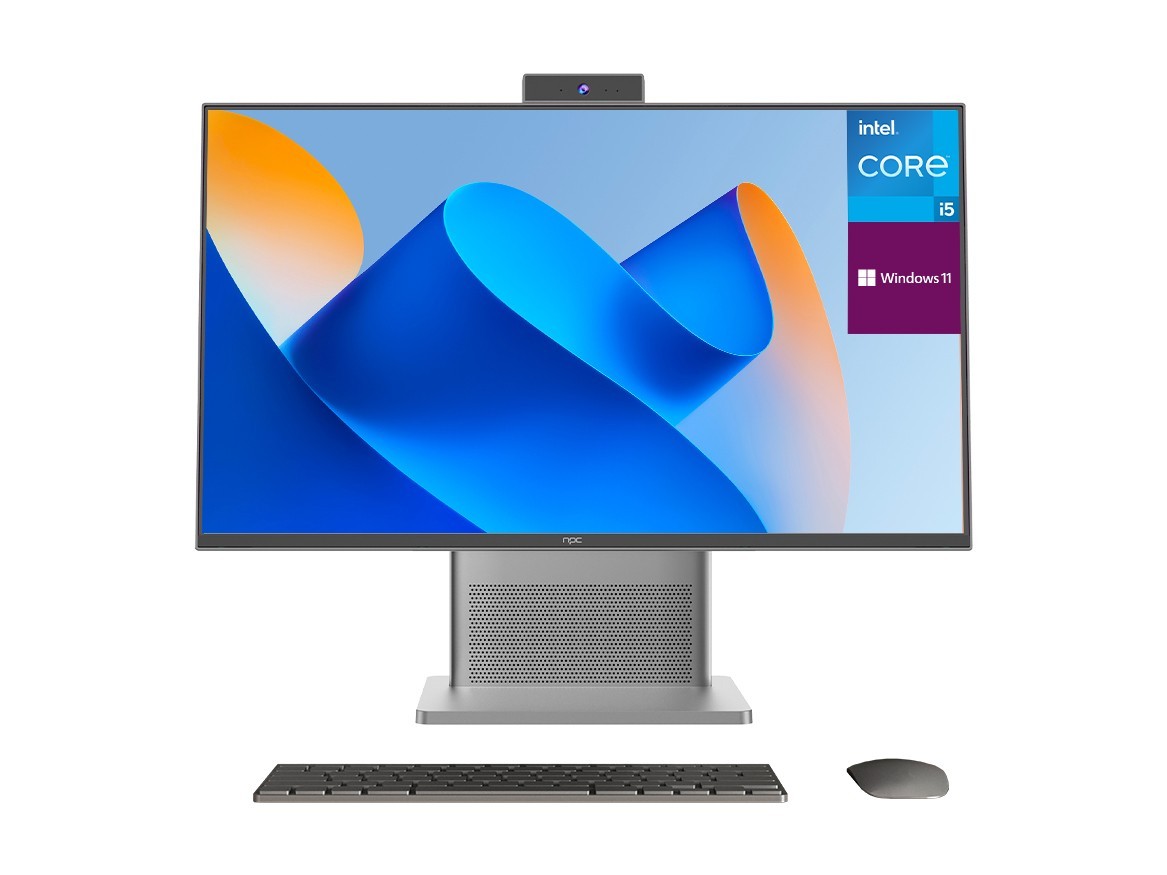
Closing synthesis
Quality control for televisions must be procedural, measurable, and enforced across hardware and software domains. Address the identified failure modes with defined assays, maintain strict production traceability, and treat the operating system as a critical subsystem with deterministic tests. Those controls translate directly into fewer returns, clearer warranty analytics, and predictable field performance—outcomes exemplified by partners who apply disciplined test protocols such as npc.