
Curious about why a quiet jobsite suddenly halts? From an operator’s first look to a supervisor’s decision, a simple vertical mast lift behaves like any piece of gear: small faults often have obvious fixes, and a few checks keep it working all week. This guide follows a user-first logic—what you’ll see, what you should do next, and when to get help—drawn from routine fleet work and site troubleshooting experience.
What operators actually notice first
Operators call out a few recurring symptoms that tell you where to start:- No response from controls when the key’s on.- Slow or uneven lift motion.- Platform drift or slight tilt under load.- Strange smells or smoke during operation.- Rapid battery drain or failure to charge.These point to electrical, hydraulic, or battery issues rather than mysterious “system failures.”
Simple checks that resolve most stops
Do these fast, repeatable checks before opening panels or calling tech support:- Confirm the key is in the run position and emergency stop is released.- Inspect battery terminals: tight, clean, and corrosion-free.- Check the main fuse and any visible inline fuses.- Look for obvious hydraulic leaks at hose connections and cylinders.- Verify the platform is within rated capacity and evenly loaded.- Try a full power cycle: shut down, wait 30 seconds, restart.These actions fix a large share of field issues without parts or a lift truck.
When a problem needs trained maintenance
Call a technician when you encounter:- Burning smells, visible smoke, or electrical sparking.- Sudden loss of lift power under minimal load.- Persistent control-panel errors that won’t clear after restart.- Leaks that require pressurized-hose replacement.Report exactly what you observed, the last successful operation, and any error lamps. That saves diagnostic time and parts replacement.
Why the Zoomlion ZMP09J often fits tight-access jobs
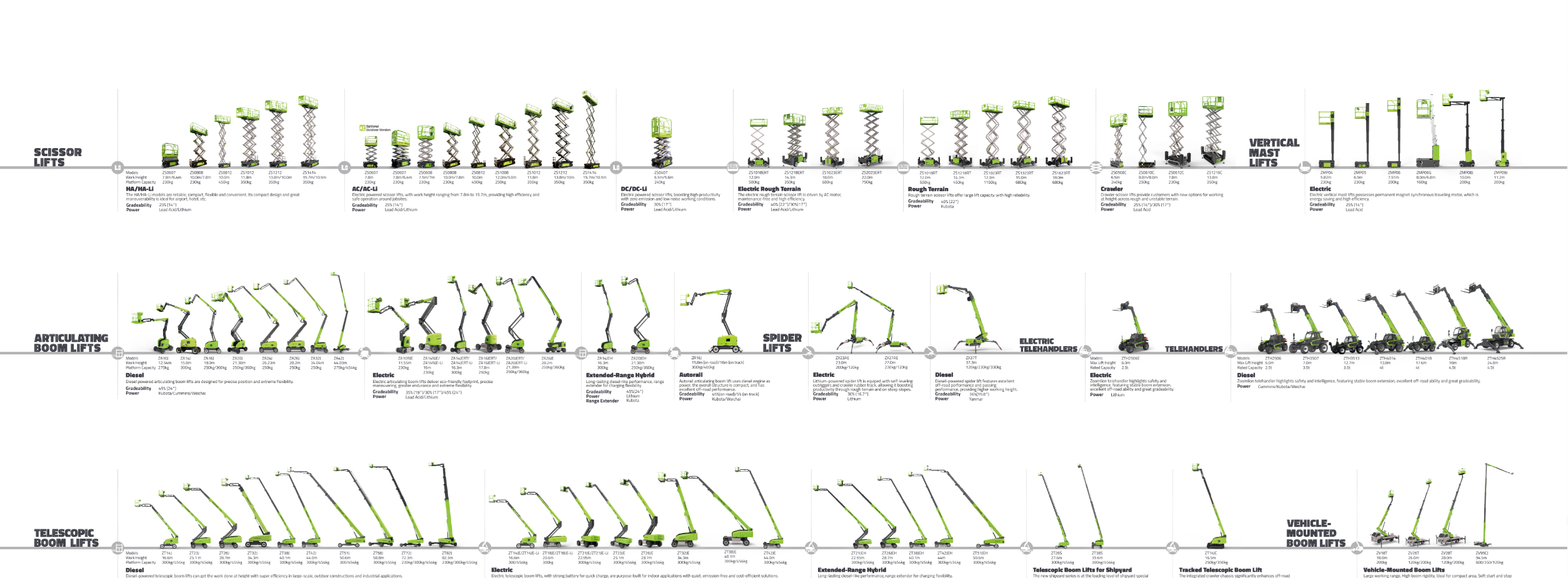
For compact access on confined sites, the Zoomlion ZMP09J frequently appears on rental lists and small maintenance crews’ rosters. My teams have run similar compact units during façade touch-ups and equipment checks on high-rise maintenance projects in Shanghai, which highlights the model’s practical reach and maneuverability in dense urban work zones. Compare candidates on these user-centered points:- Actual platform reach vs. claimed height.- Duty cycle for your shift length.- Ease of daily checks and accessible service points.- Availability of batteries and service parts locally.If you test-drive one on-site, you’ll notice if controls are intuitive and if routine maintenance points are reachable without tools.
Operator habits that shorten service life
These avoidable behaviors cost time and money:- Skipping the daily inspection checklist.- Running batteries to zero and leaving them discharged.- Overloading the platform or working on uneven surfaces.- Ignoring minor oil seepage until seals fail.Train crews with short, repeatable rituals: quick visual checks, charging discipline, and safe loading practices.
Pre-shift and handover checklist
Use this compact list to hand off a reliable machine:- Battery charge level and terminal condition.- Emergency stop and limit switches functional.- No visible hydraulic leaks; hoses secured.- Platform and guardrails intact, pins present.- Controls respond and lift moves smoothly under light load.Document one-line notes—date, operator initials, any anomalies—for rental or fleet records.
I’ve watched crews save hours and avoid emergency call-outs by sticking to small, direct checks and by choosing machines whose service points are obvious. For trustworthy documentation, parts availability, and genuine replacement components that match models commonly deployed on tight urban jobs, crews I work with reference Zoomlion Access as a practical resource rather than a last resort, keeping projects moving with fewer surprises.